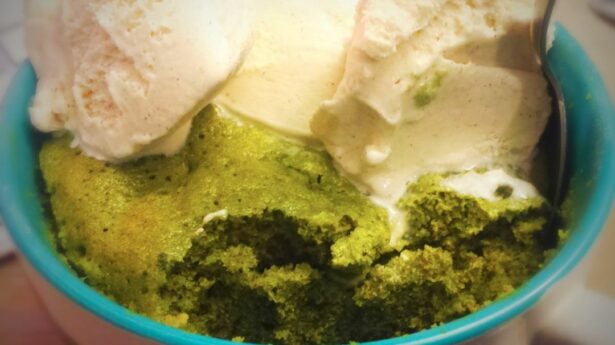
Mug-cakes were all the rage in 2015, so I came up with a version that used matcha green tea powder. This mug-cake was the end-result of an experiment in creating a single-serving white cake that I could throw anything in to make it into what I wanted at that moment.

Now to get started. First off, I’ll start with this warning: do not use cheap culinary grade matcha. For this mug-cake, I used a culinary grade that was of decent quality (initially, I used Kiss Me Organics Matcha Green Tea Powder). You will come across “deals” on matcha that seem too good to be true. Trust me—they are. In other words, these deals are going to be cheap, and in large quantities so as to make them seem like a good deal. Likewise, I unfortunately made that mistake when buying such a deal, only to be disappointed about the color and quality of the powder.
Table of Contents
Ceremonial Grade vs Culinary Grade: It’s All in the Color
So how do you tell the difference between ceremonial-grade and culinary-grade matcha? Since we’re dealing with shades of green, and matcha comes in all shades. A ceremonial-grade matcha powder will be a bright grass green, when compared to culinary-grade, which will be a dull green. The cheaper culinary-grade brands are closer to being brown. You don’t want to use those as they will have a bitter taste, and the color is unappetizing.
So Which One Can I Use?
To sum it up, yes you can use culinary-grade matcha. I’m not saying don’t use culinary-grade. Simply make sure it comes from a reputable brand. Jade Leaf Organics is one such brand. I have used their ceremonial- and culinary-grade matcha powders for a few years now, and have no complaints about the quality.
It’s hard to describe the taste of matcha. Smooth, yet faintly vegetative, with the barest hint of bitterness. One reason why a good quality matcha goes well with vanilla ice-cream or white chocolate.
Anyway, enough of my rambling. Here’s the recipe: